

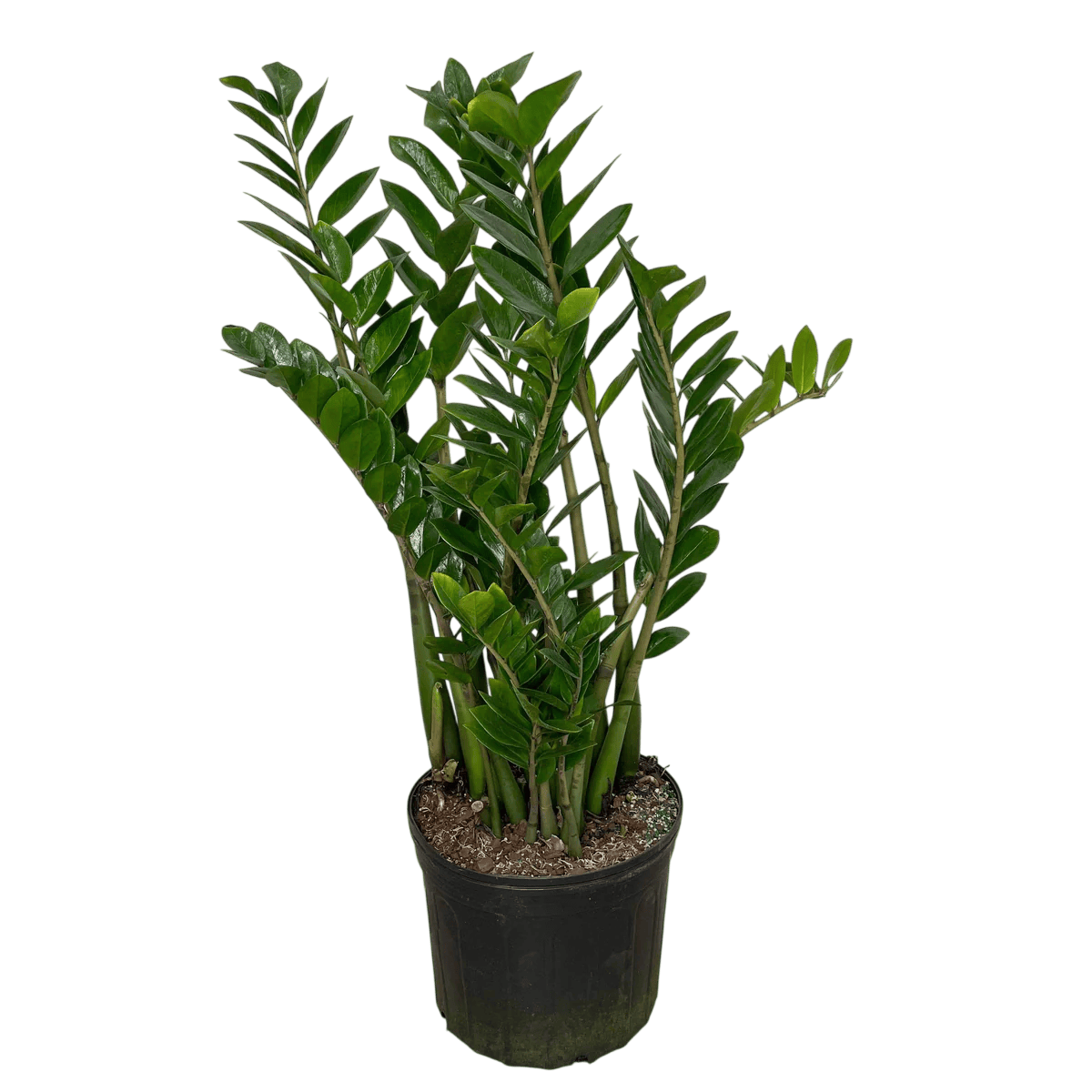
The ZZ Plant (Zamioculcas zamiifolia) is one of the most resilient and stylish indoor plants you can own. Known for its glossy, deep green leaves and upright growth, this plant adds a clean, modern touch to homes, offices, and commercial spaces.
Highly tolerant of neglect, the ZZ Plant can thrive in low light and requires minimal watering, making it ideal for beginners or anyone with a busy schedule. Its ability to withstand varying conditions has made it a favorite among plant lovers looking for beauty without the stress of constant care.
Whether placed in a living room corner, office desk, or hallway, the ZZ Plant brings a calm, polished aesthetic that complements any décor style.
Why you’ll love it:
Extremely low maintenance
Thrives in low light conditions
Sleek, glossy foliage for modern interiors
Highly drought-tolerant
3. Care Guide
Light: Low to bright indirect light (very adaptable)
Watering: Water every 2–3 weeks; allow soil to dry out completely between watering
Soil: Well-draining potting mix
Temperature: 18–32°C
Humidity: Tolerates low to moderate humidity
Growth Rate: Slow to moderate
Pet Safety: ⚠️ Toxic if ingested by pets or humans
4. Key Features
🌿 Glossy, attractive dark green leaves
💧 Extremely drought-tolerant
🏡 Perfect for homes, offices, and low-light spaces
🪴 Minimal care required
🌱 Ideal for beginners and busy individuals
FAQ Section
Q: How often should I water a ZZ Plant?
A: About every 2–3 weeks, allowing the soil to dry out completely between watering.
Q: Can it survive in low light?
A: Yes, it’s one of the best plants for low-light environments.
Q: Is the ZZ Plant good for beginners?
A: Absolutely—it’s one of the easiest plants to care for.
Q: Why are my ZZ Plant leaves turning yellow?
A: This is usually caused by overwatering


