

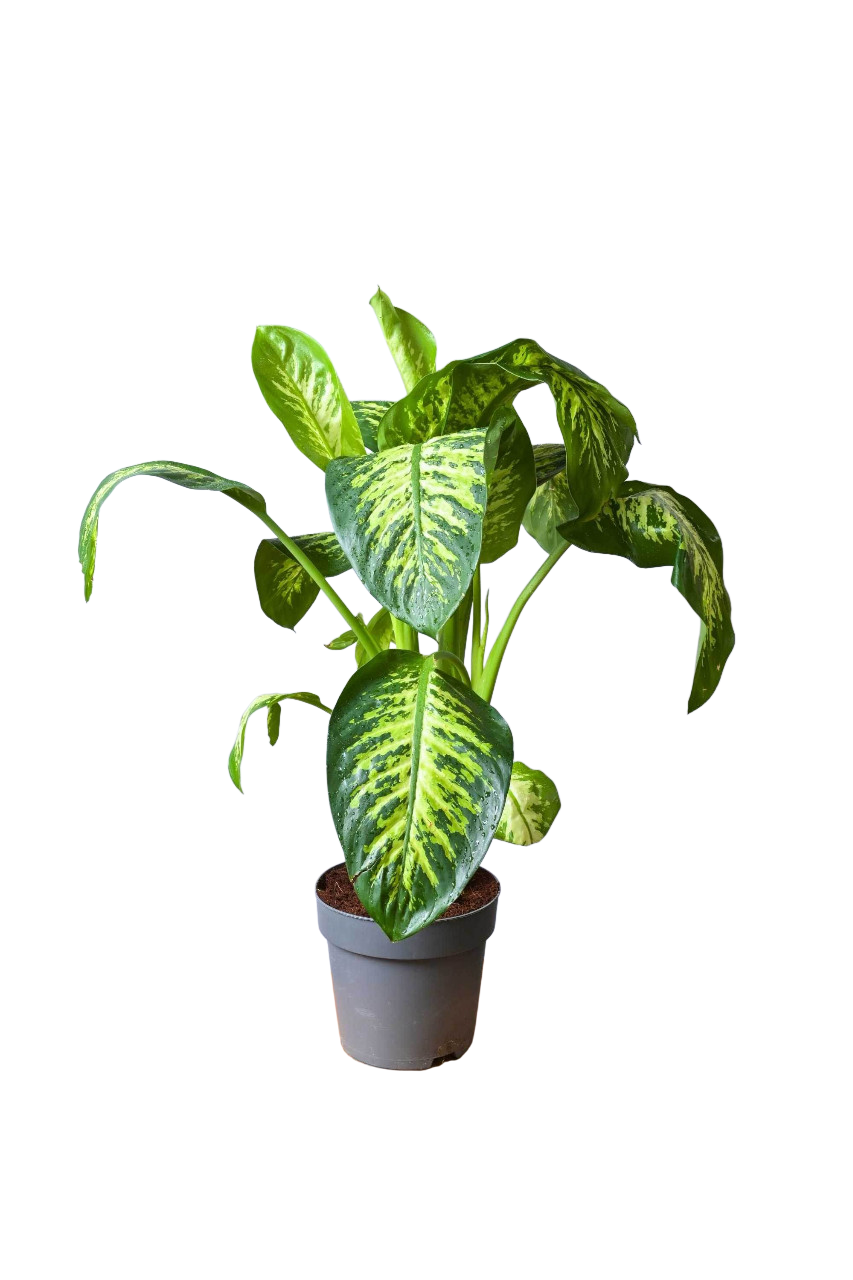
Dieffenbachia, commonly known as the Dumb Cane plant, is a popular indoor plant admired for its large, beautifully patterned leaves featuring shades of green, cream, and yellow. Its bold foliage makes it a standout choice for creating a vibrant, tropical feel in homes and offices.
This plant is not only visually appealing but also relatively easy to care for, making it ideal for both beginners and experienced plant lovers. It thrives in indoor environments and adapts well to typical room conditions, bringing life and color to corners, living rooms, and workspaces.
Dieffenbachia is perfect for anyone looking to make a statement with greenery while keeping maintenance manageable. Its upright growth habit also makes it great for filling empty spaces with natural beauty.
Why you’ll love it:
Stunning variegated foliage
Adds a tropical, luxurious feel
Easy to care for indoors
Perfect for home and office décor
3. Care Guide
Light: Bright, indirect light (tolerates low light but grows best in brighter conditions)
Watering: Water when the top soil feels dry; avoid overwatering
Soil: Well-draining potting mix
Temperature: 18–30°C
Humidity: Prefers moderate humidity
Growth Rate: Moderate to fast
Pet Safety: ⚠️ Toxic if ingested by pets or humans
4. Key Features
🌿 Large, eye-catching patterned leaves
🏡 Ideal for indoor décor and statement pieces
💧 Moderate watering needs
🌱 Beginner-friendly with proper care
🌴 Adds a lush, tropical ambiance
FAQ Section
Q: Is Dieffenbachia safe for pets?
A: No, it is toxic if ingested. Keep it out of reach of pets and children.
Q: How often should I water it?
A: Water when the top layer of soil dries out—usually once a week depending on conditions.
Q: Can it survive in low light?
A: Yes, but it grows best in bright, indirect light.
Q: Why are the leaves turning yellow?
A: This is often due to overwatering or poor drainage.


