

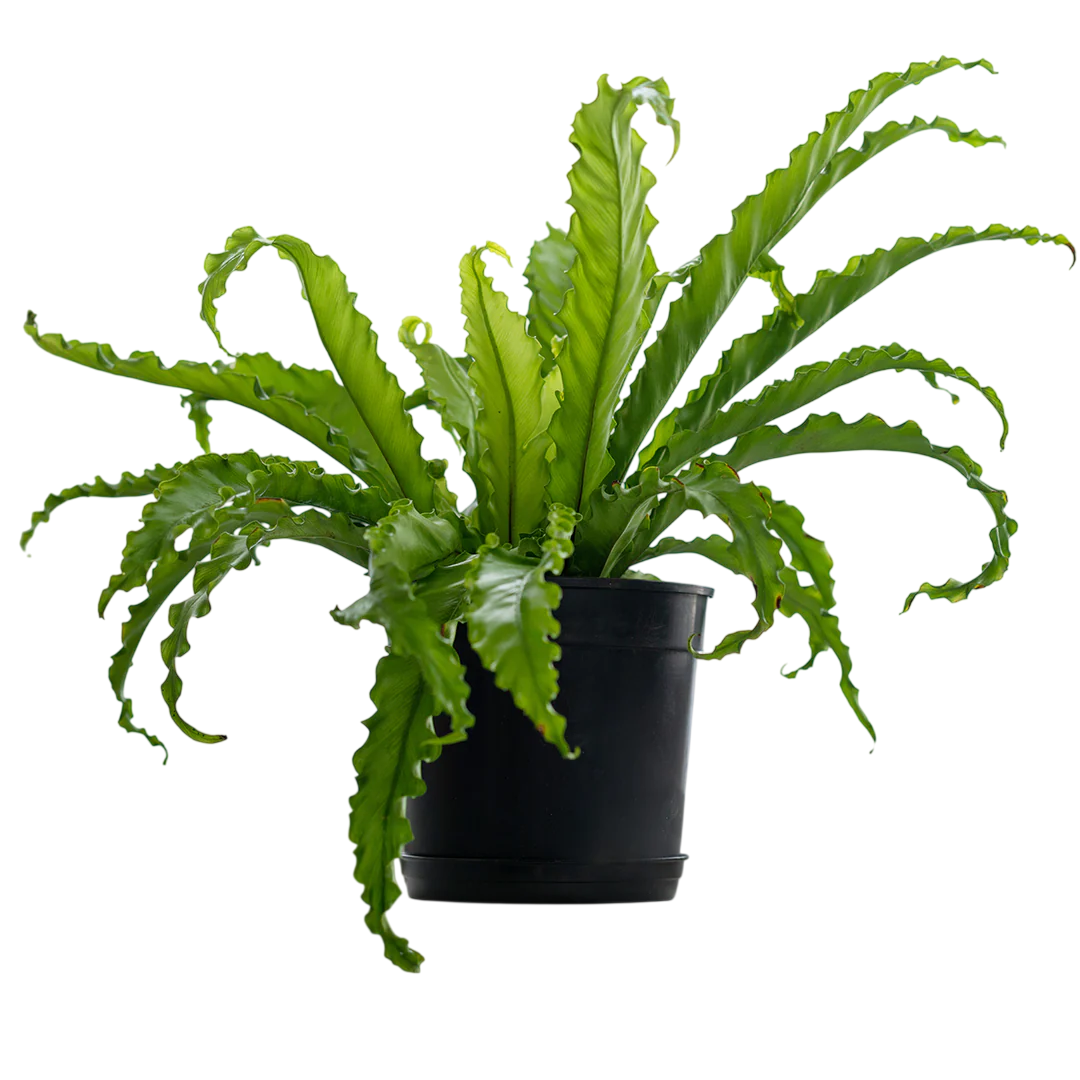
The Bird’s Nest Fern (Asplenium nidus) is a beautiful tropical plant known for its broad, wavy fronds that grow in a rosette pattern resembling a bird’s nest. Its fresh, bright green foliage brings a soft, natural look that instantly refreshes any indoor space.
Unlike many ferns, this variety is easier to care for and adapts well to typical indoor environments, making it a great choice for both beginners and experienced plant lovers. Its compact yet full shape makes it perfect for tabletops, shelves, and shaded corners.
Ideal for homes and offices, the Bird’s Nest Fern adds a calming, tropical vibe without demanding constant attention. It’s perfect for creating a relaxing, nature-inspired atmosphere.
Why you’ll love it:
Lush, wavy leaves with a unique shape
Easy-care fern compared to other varieties
Perfect for adding a soft tropical feel
Great for small to medium indoor spaces
3. Care Guide
Light: Medium to bright indirect light (avoid direct sunlight)
Watering: Keep soil slightly moist; water regularly but avoid soggy soil
Soil: Well-draining, rich potting mix
Temperature: 18–30°C
Humidity: Prefers high humidity
Growth Rate: Moderate
Pet Safety: Generally non-toxic to pets
4. Key Features
🌿 Bright green, wavy fronds
🏡 Ideal for indoor décor and shaded areas
💧 Moderate watering needs
🌱 Beginner-friendly compared to most ferns
🌴 Adds a tropical, calming ambiance
7. FAQ Section
Q: Is the Bird’s Nest Fern easy to care for?
A: Yes, it’s one of the easier fern varieties, especially with consistent watering and humidity.
Q: How often should I water it?
A: Keep the soil lightly moist—water when the top layer starts to dry.
Q: Can it tolerate low light?
A: It can survive in lower light but thrives in medium to bright indirect light.
Q: Why are the leaves turning brown?
A: This is usually due to low humidity or inconsistent watering.


